How can a solid alloy - without holes drilled or milling channels - reliably evacuate air during molding? UnionTech's self-developed breathable high thermal conductivity alloy mold provides the answer. With an internally uniform network of interconnected micro-pores, it achieves “material self-venting.” From shoe moulds to tire moulds, it completely eliminates stubborn defects such as trapped air, scorching and rubber tails - without any mechanical venting structures - while also boosting thermal conductivity and shortening the production cycle. This is not just a minor adjustment of the material, but a fundamental rethinking of the logic of mold venting.
In the field of foam material molding, mold venting has long represented an ongoing industrial challenge. Traditional molding requires drilling numerous tiny vent holes - a tedious process that often results in clogged holes and leftover burrs on the surface of the part.
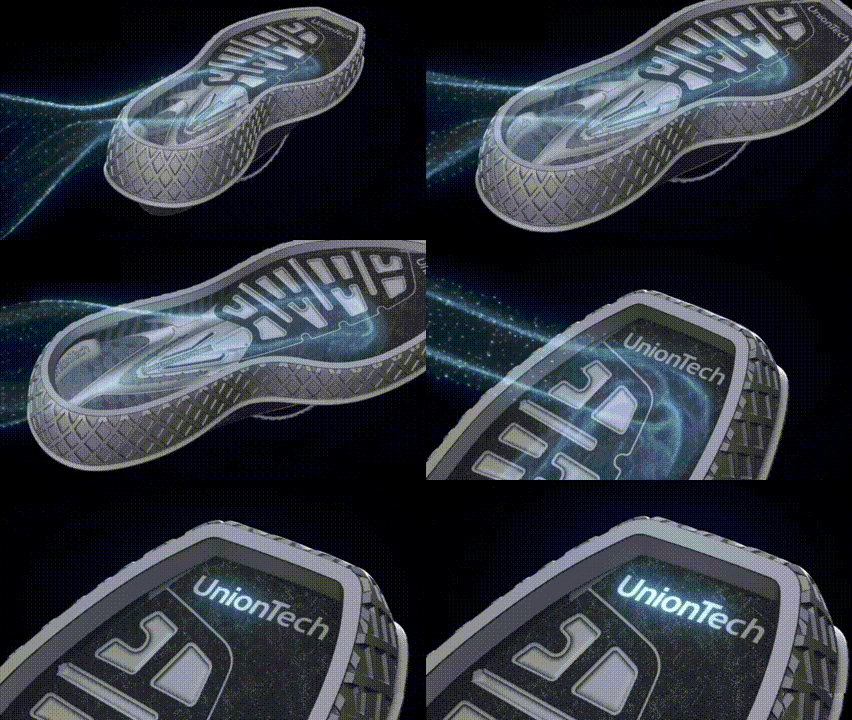
The breathable high thermal conductivity alloy mold is a porous alloy with a connected pore structure that allows natural venting from the inside out without the need for additional drilling. The core technical breakthrough lies in achieving coordinated control of dimension accuracy, structure density, and pore connectivity – all while maintaining shaping accuracy and mechanical strength. The material remains dimensionally stable at typical foam molding temperatures. It is both "breathable" and "dense," fundamentally breaking the vicious cycle of “drilling–pore clogging–re-drilling” of traditional molds. UnionTech has successfully fabricated functional mold components from this breathable high thermal conductivity alloy mold using both 40-layer and 60-layer components. Both thickness options demonstrate excellent air permeability and meet the actual venting and demanding requirements of shoe molds.

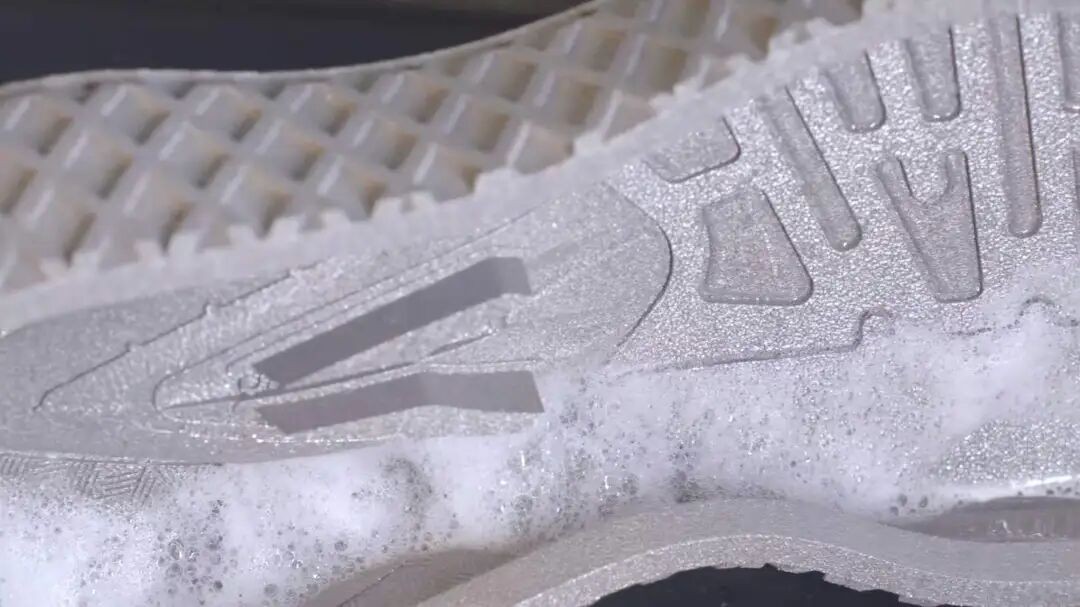
In conventional midsole manufacturing, EVA molds have to be rapidly heated, shaped using a hydraulic press, and then quickly cooled to stabilize the form. During this process, the material expands as it heats, creating a large amount of air. If this air is not released promptly, it may accumulate and cause localized overheating, leading to scorching and degradation of the material, resulting in a high rate of scrapping.
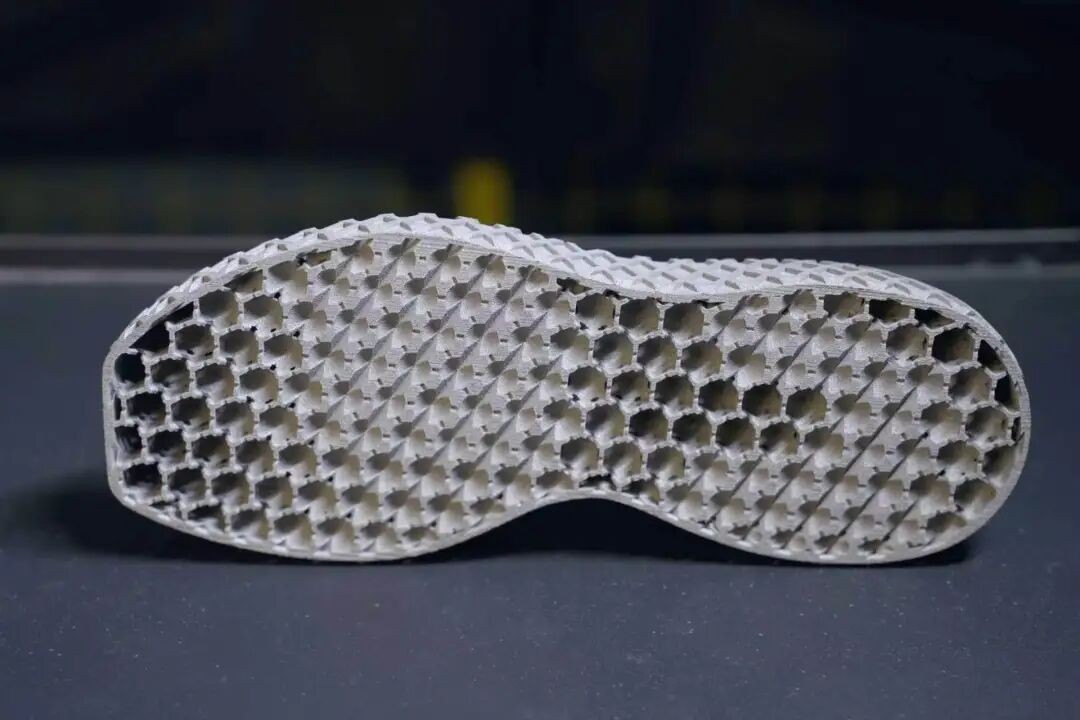
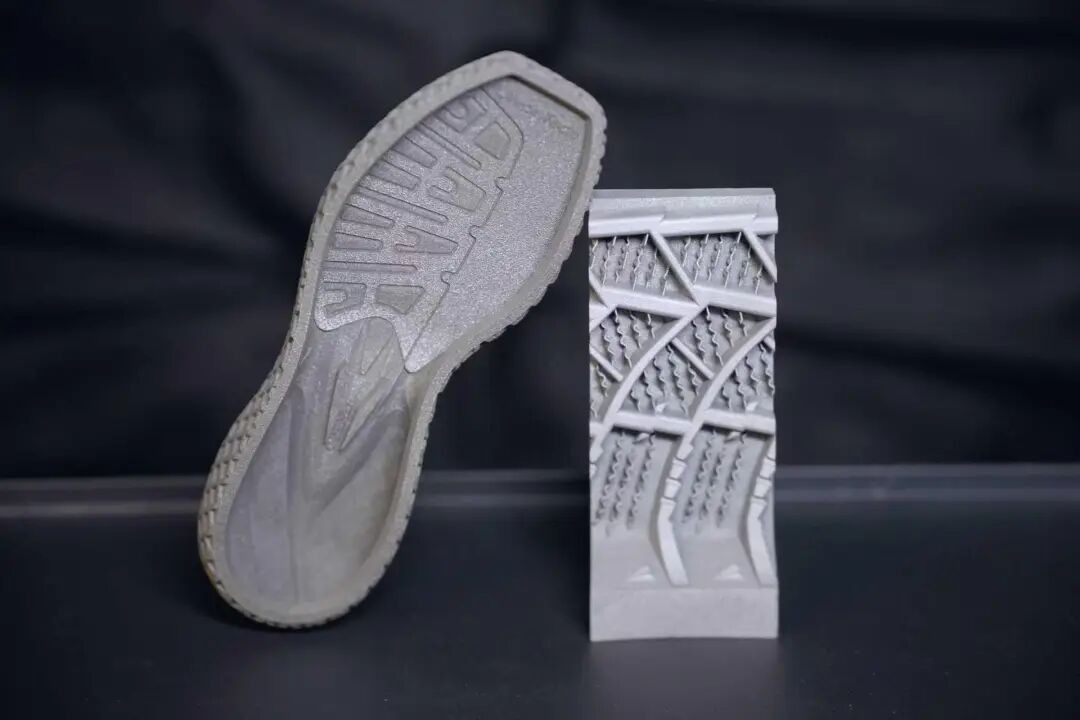
By fabricating shoe molds using a high thermal conductivity alloy, the resulting molds not only retain the heat dissipation capability of traditional EVA molds - enabling rapid cooling and shortening the cooling cycle for increased production efficiency - but also eliminate the need for separate venting processes. A uniformly distributed network of micropores within the material itself forms a full-area exhaust channel, allowing the air created during the molding process to escape smoothly from any location in the mold cavity. This fundamentally resolves the air entrapment problem and prevents localized overheating and scorching defects. Compared to conventional non-ventilated molds, this solution maintains mold strength while significantly reducing scrap rates, simplifying production steps, and enhancing overall manufacturing efficiency.
During tire vulcanization, if the air between the green tire compound and the mold cavity is not expelled smoothly, trapped air defects - such as voids and material deficiencies in the tread - can result, affecting dynamic balance performance and safety. Conventional moulds use vent holes to release air; However, during air escape, rubber compounds may also escape through these holes, forming burrs that require additional pruning after vulcanization, resulting in time and material wastage.
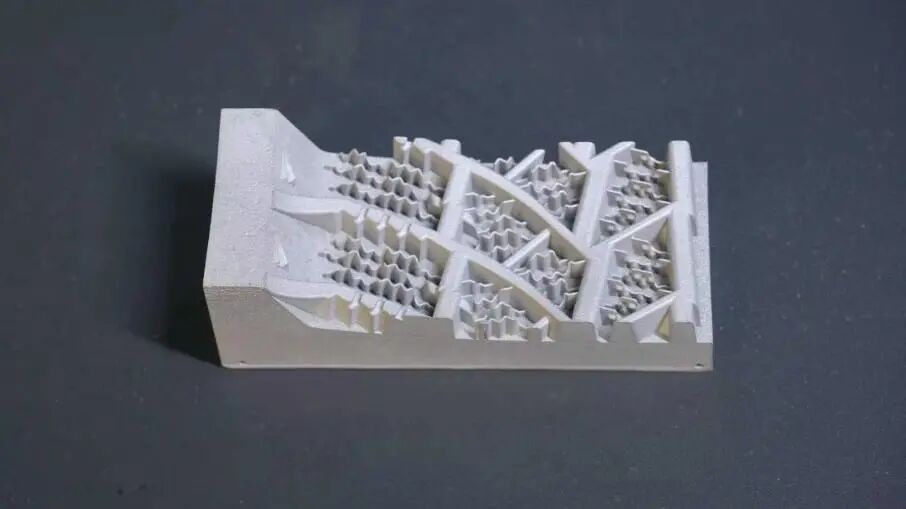
UnionTech's application of self-developed high-thermal conductivity alloy breathable molds has changed this paradigm. In tire vulcanization molds, excess air can be directly expelled from the mold cavity by interconnecting micropores within the high-thermal conductivity alloy, while the rubber compound is effectively confined within the mold cavity. This mechanism delivers three key breakthroughs:
Elimination of trappedgas defects
Elimination of air-trapping defects: Full-area micro-porous venting replaces the limited exhaust holes, significantly reducing tread porosity and rubber deficiency.
Improved vulcanization quality
Improved vulcanization quality: Smooth air evacuation ensures a more uniform pressure and temperature distribution during vulcanization, greatly improving tire surface smoothness, wear resistance and dynamic balance performance. No rubber burrs remain on the treads, eliminating the need for trimming.
Higher production efficiency
Increases production efficiency: The excellent thermal conductivity of the high-conductivity alloy permeable molds helps to shorten the vulcanization cycle while eliminating post-processing steps, resulting in a significant increase in output per unit time.
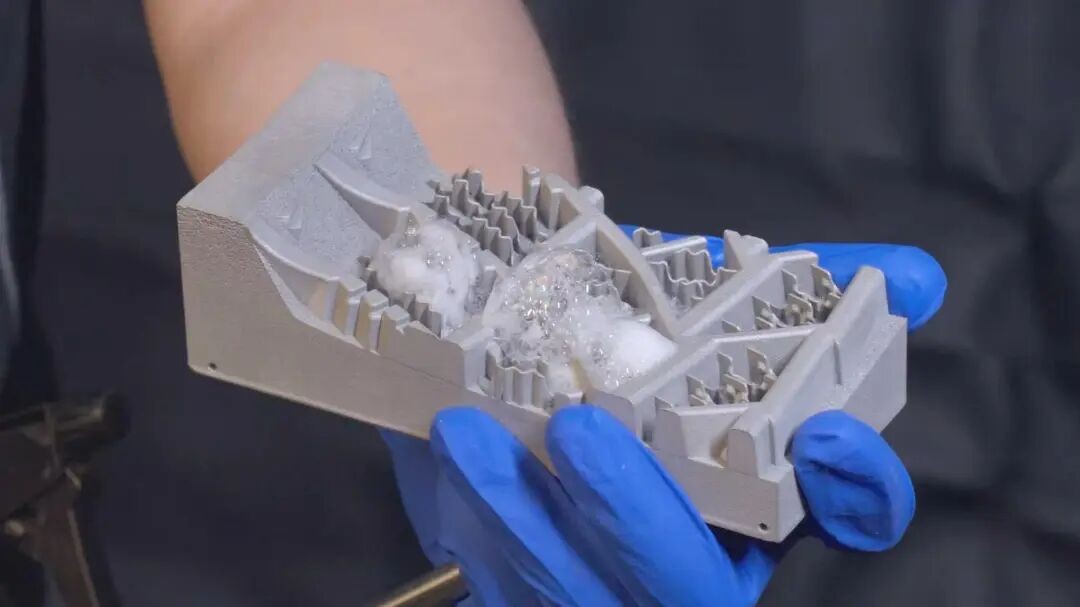

UnionTech’s breathable high thermal conductivity alloy mold replaces traditional “drilled vent holes” with “material self-venting.”, demonstrating significant value in both shoe and tire mold applications—eliminating trapped air, preventing scorching, improving quality, and shortening production cycles. This technology is driving mold design towards functionalized alloy materials, providing a new solution for enhancing efficiency in footwear manufacturing.

在线咨询
微信咨询
 微信扫码咨询
电话咨询